Three purpose-built engines.
One trusted architecture.
Most clinical AI tools stop at a recommendation. CENTYENT is built as two purpose-built engines under one architecture: a deterministic clinical reasoning engine and an embedded financial engine, kept structurally separate — so the recommendation and the ability to pay for it never influence each other.
CLINICAL REASONING
Deterministic,
not probabilistic
Where LLM-first tools generate a recommendation by pattern-matching against training data, CENgraph reasons from rule-based clinical logic: it starts from peer-reviewed guidelines and treatment literature and produces a ranked, traceable output — the same input produces the same output, every time.
the model thinks this is likely.
Here is the specific guideline this came from.
BUILDING TRUST
Built for
transparency.
Architecture designed to comply with FDA glass-box guidelines
The clinician inputs patient information in natural language: demographics, symptoms, comorbidities, lab results, medications, and procedures through a natural-language prompt interface. No rigid forms. No separate application. No disruption to the existing consult pattern.
A financial engine that only activates after clinical sign-off
CENwallet is a separate engine from CENgraph by design, not just by policy. It doesn’t see a case until independent clinical review is complete, and it has no path to influence what the clinical engine recommends. The result is the property regulators and clinicians care about most: financing availability never becomes a reason to recommend, or withhold, care.
Architecture
One integration layer,
not stitched-together tools
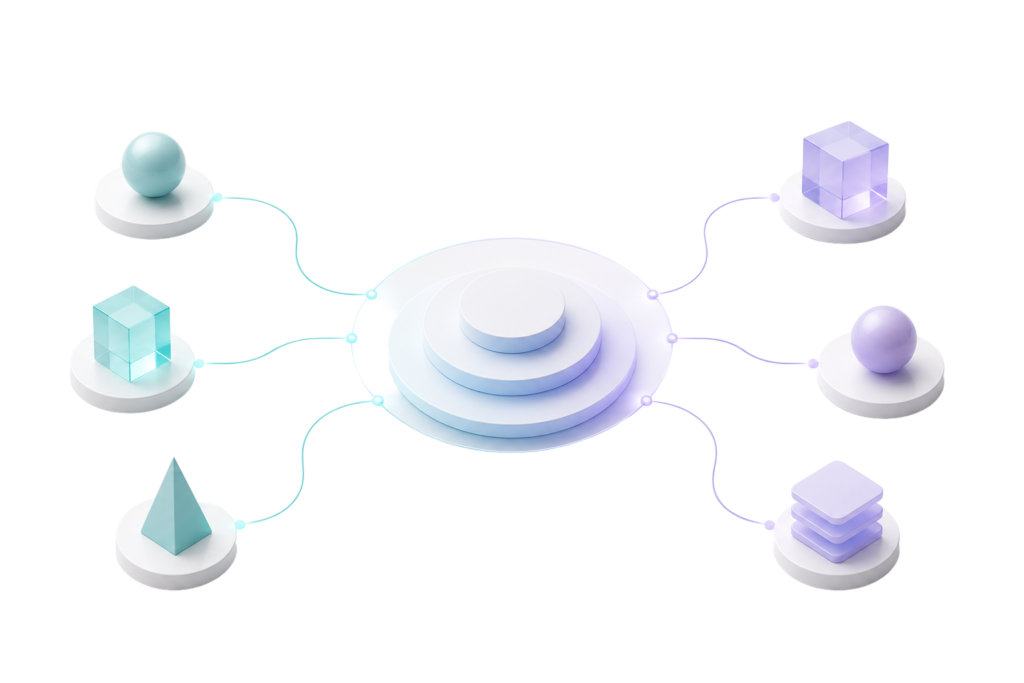
Most competitors do clinical decision support, or embedded financing — rarely both, and rarely connected. CENTYENT’s advantage isn’t either piece alone; it’s the layer that connects a clinical recommendation to a financing decision inside the same patient encounter. That integration layer is the core of our patent filings.
Architecture
Built to extend
The reasoning and financing engines behind CENgraph and CENwallet aren’t hardcoded to healthcare — the knowledge base and financing logic are what’s specific to today’s use case. Healthcare is where we’re proving the model first; the underlying architecture is built to extend into adjacent care pathways as that opportunity matures.
Competitive advantage
Why this combination is
hard to copy.
Deterministic, guideline-traceable reasoning
— not pattern-matched output.
Clinical and financial engines structurally separated
— not bolted together after the fact.
Point-of-care financing embedded in the clinical workflow
— not an external, disconnected step.
A single integration layer to be protected by filed patent claims
— not individually replicable components.
We keep the underlying mechanics of how these engines are built and connected out of public materials, for competitive and regulatory reasons — but we’re glad to walk investors and partners through the architecture directly.